
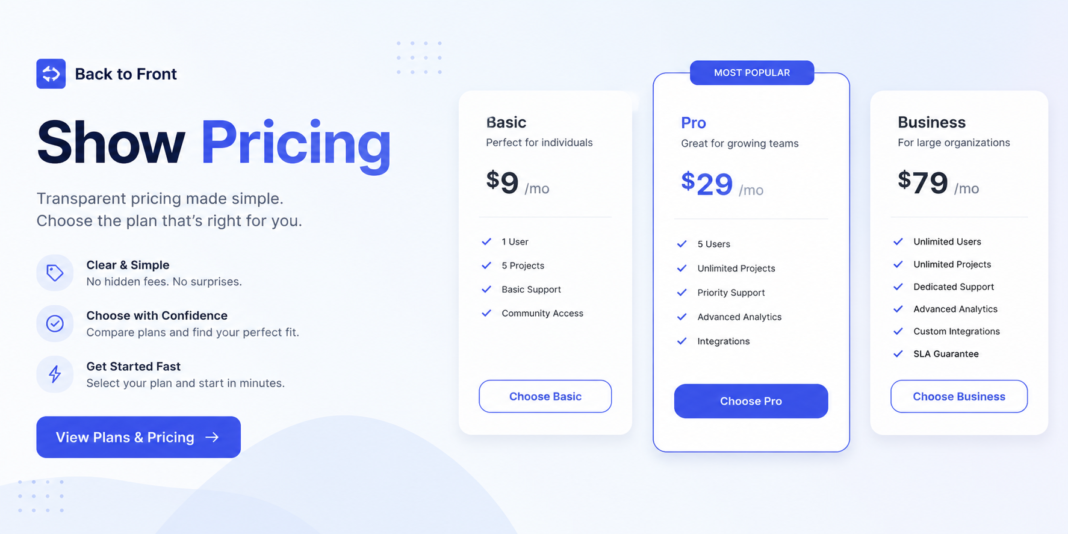
Understanding Backtofrontshow Pricing is often one of the first steps people take before deciding whether the platform, service, or offering aligns with their goals. Cost influences purchasing decisions, but modern buyers rarely focus on price alone. They also evaluate value, flexibility, features, scalability, support, and long-term return on investment.
The challenge is that pricing discussions can become confusing when users only compare numbers without considering outcomes. A lower monthly fee does not automatically mean better value, and a higher fee is not always expensive when measured against productivity, audience growth, operational efficiency, or revenue potential. This guide explores every major aspect of backtofrontshow pricing, helping readers understand what affects costs, what value indicators matter most, and how to evaluate pricing from a strategic perspective.
Understanding the Basics of Backtofrontshow Pricing
When evaluating any modern digital service, pricing is rarely a simple fixed number. Costs are typically influenced by feature access, usage levels, audience size, support requirements, implementation complexity, and long-term business objectives. Understanding these variables creates a more accurate framework for evaluating what users actually receive in exchange for their investment.
A thoughtful examination of backtofrontshow pricing begins by looking beyond the surface. Instead of asking only “How much does it cost?” experienced buyers ask additional questions. They want to know what is included, what limitations exist, whether upgrades are available, and how the service contributes to measurable results over time.
Why Pricing Transparency Matters
Pricing transparency plays a significant role in customer trust. Buyers increasingly prefer providers that clearly communicate costs, included features, and upgrade paths. Transparency reduces uncertainty and helps prospects determine whether a solution fits their requirements before committing time to lengthy evaluation processes.
For businesses, transparent pricing also improves customer satisfaction because expectations are aligned from the beginning. When people understand what they are paying for and why certain features are included in specific tiers, they are more likely to perceive the overall offering as fair and valuable.
Key Factors That Influence Cost
Several variables commonly influence service pricing structures. These include feature depth, automation capabilities, user limits, storage requirements, integrations, customization options, and customer support levels. Providers often organize these variables into pricing tiers that serve different customer segments.
In many cases, backtofrontshow pricing may be evaluated through a combination of feature access and usage requirements. Organizations with larger operational needs typically require broader functionality, while smaller users may focus on affordability and essential capabilities that help them achieve immediate goals.
How Businesses Evaluate Pricing Value
Smart buyers rarely choose solutions based solely on the lowest cost. Instead, they evaluate overall value. Value represents the relationship between cost and outcomes. If a platform saves substantial time, improves efficiency, or contributes to growth, its perceived value increases significantly.
Decision-makers often compare acquisition costs against expected benefits. These benefits may include reduced labor requirements, improved customer experiences, streamlined workflows, stronger engagement metrics, or increased revenue opportunities. This broader perspective creates a more accurate picture of investment quality.
The Difference Between Price and Return on Investment
Price represents the amount paid. Return on investment represents the measurable outcome generated from that spending. Many organizations mistakenly focus on the first metric while overlooking the second, even though ROI ultimately determines whether a purchase was successful.
When analyzing backtofrontshow pricing, considering potential returns provides a more balanced perspective. A solution that generates measurable improvements can justify higher costs, while a cheaper alternative may become more expensive if it requires additional manual effort or produces weaker results.
Common Pricing Models in the Market
Modern service providers typically adopt several pricing approaches. Subscription-based pricing remains one of the most common models because it creates predictable costs and allows ongoing product improvements. Users benefit from continuous updates while providers maintain recurring revenue.
Other models include usage-based pricing, feature-based pricing, enterprise agreements, and hybrid structures. Each model serves different customer needs. Understanding these frameworks helps buyers determine which approach aligns best with their budget and operational requirements.
How Small Businesses View Pricing
Small businesses usually operate with limited budgets and a strong focus on efficiency. Every purchase must contribute measurable value, making pricing analysis especially important. These organizations often seek solutions that balance affordability with practical functionality.
For many smaller teams, backtofrontshow pricing becomes attractive when it offers scalability. Businesses want the ability to start with essential features and expand later rather than paying for advanced functionality they may not immediately need.
Enterprise Considerations and Budget Planning
Large organizations evaluate pricing through a different lens. While cost remains important, enterprises frequently prioritize reliability, security, compliance, integrations, and scalability. A solution that supports complex operations may justify a higher investment due to its strategic impact.
Budget planning within enterprise environments often includes implementation costs, training requirements, maintenance considerations, and support expectations. Decision-makers evaluate total cost of ownership rather than focusing exclusively on subscription fees.
Comparing Feature-Based Pricing Structures
Feature-based pricing separates plans according to available functionality. Entry-level plans typically include core capabilities, while premium tiers unlock advanced tools, automation, reporting, customization, and enhanced support. This model allows customers to choose based on their needs.
The advantage of this structure is flexibility. Users can begin with a lower-tier plan and upgrade when requirements grow. This creates a smoother adoption journey while helping businesses control spending during early implementation stages.
Understanding Backtofrontshow Pricing and What It Really Includes
Backtofrontshow pricing is more than a simple monthly or annual fee—it reflects a structured system of value based on features, access levels, and intended user needs. Most users initially approach pricing as a flat number, but modern digital platforms usually bundle multiple layers of functionality into each tier, making cost a reflection of capability rather than just expense.
When evaluating backtofrontshow pricing, it’s important to break down what is actually included in each plan. This typically involves core features, premium tools, usage limits, and support levels, all of which combine to shape the overall user experience and long-term value.
Key Drivers That Shape Backtofrontshow Pricing Models
Several underlying factors influence backtofrontshow pricing, including feature depth, infrastructure costs, scalability requirements, and customer support structure. Platforms often adjust pricing based on how resource-intensive certain features are, especially when automation, storage, or high-volume usage is involved.
Another major driver is market positioning and user segmentation. Entry-level users usually receive simplified access at a lower cost, while advanced users or businesses pay more for expanded capabilities, integrations, and performance enhancements that support complex workflows.
Why Value Matters More Than Backtofrontshow Pricing Alone
Focusing only on backtofrontshow pricing can lead to incomplete decisions because cost does not always reflect overall value. A slightly higher-priced plan may deliver significantly better efficiency, automation, or scalability, which reduces operational workload and increases long-term returns.
Value-based evaluation considers what users actually gain from the platform, such as time savings, improved output quality, or reduced need for additional tools. This approach helps buyers see pricing as an investment rather than just an expense.
Common Mistakes When Evaluating Backtofrontshow Pricing
One common mistake is comparing plans solely based on price without analyzing included features. This often leads to choosing a cheaper option that lacks critical tools, ultimately increasing costs through workarounds or additional software purchases.
Another frequent error is ignoring scalability when reviewing backtofrontshow pricing. A plan that looks affordable today may become restrictive as usage grows, leading to expensive upgrades or migration challenges later.
How to Choose the Right Backtofrontshow Pricing Plan
Selecting the right backtofrontshow pricing plan starts with clearly defining your goals and required features. Users should identify must-have capabilities versus optional features to avoid paying for unnecessary extras or missing essential tools.
It is also important to evaluate long-term needs rather than just immediate requirements. A well-chosen plan should support growth, offer flexibility, and maintain cost efficiency as usage scales over time, ensuring sustainable value and performance.
Scalability and Long-Term Cost Management
Scalability is one of the most important considerations when evaluating any service. A platform that supports growth reduces future migration costs and prevents operational disruptions. Organizations often underestimate the value of choosing a scalable solution early.
When assessing backtofrontshow pricing, scalability should be viewed as part of the overall investment equation. A solution that accommodates future growth can reduce long-term expenses by eliminating the need for frequent platform changes or costly transitions.
Cost Versus Capability Analysis
A meaningful pricing evaluation compares capabilities against expenses. Organizations should identify their most important objectives and determine which features directly support those goals. Paying for unused functionality can reduce efficiency and increase waste.
Conversely, choosing a plan that lacks critical capabilities can create hidden costs through manual workarounds, additional software purchases, or productivity losses. The ideal balance occurs when pricing aligns closely with operational requirements.
Pricing Comparison Table
The following table illustrates how organizations commonly compare pricing considerations when evaluating solutions.
| Evaluation Area | Budget Focus | Mid-Level Focus | Advanced Focus |
| Monthly Cost | Low | Moderate | Higher |
| Feature Depth | Essential Tools | Expanded Capabilities | Comprehensive Functionality |
| Scalability | Basic Growth | Moderate Expansion | Enterprise Growth |
| Support Access | Standard | Priority | Dedicated |
| Customization | Limited | Moderate | Extensive |
| Integrations | Core Integrations | Expanded Options | Advanced Ecosystem |
| Reporting | Basic Analytics | Enhanced Reporting | Strategic Intelligence |
| ROI Potential | Incremental Gains | Strong Efficiency Gains | Significant Operational Impact |
This framework demonstrates why pricing cannot be evaluated in isolation. Two solutions with similar costs may deliver entirely different outcomes depending on the features, support levels, and strategic benefits included within each tier.
Hidden Costs Buyers Often Overlook
Many purchasing decisions focus heavily on visible costs while overlooking hidden expenses. These may include onboarding requirements, employee training, third-party integrations, migration efforts, consulting fees, or workflow redesign initiatives.
A complete evaluation should identify every cost associated with adoption and ongoing use. This broader approach helps organizations avoid surprises and creates more accurate financial projections before implementation begins.
The Role of Customer Support in Pricing
Support quality can significantly influence perceived value. Users often discover the importance of responsive support when technical issues arise or when guidance is needed during implementation. Strong support can reduce downtime and improve adoption success.
Some pricing structures differentiate plans based on support access. Premium tiers may offer faster response times, dedicated account management, specialized onboarding assistance, or priority issue resolution that enhances the overall customer experience.
How Market Competition Influences Pricing
Competitive markets naturally influence pricing strategies. Providers continuously evaluate customer expectations, industry standards, and competitor offerings when refining their plans. This environment encourages innovation while creating pressure to deliver greater value.
As competition increases, buyers often benefit through improved features, enhanced support, and more flexible pricing options. Providers must demonstrate clear differentiation to justify their pricing position and maintain customer loyalty.
Evaluating Affordability Beyond Monthly Fees
Affordability should be viewed through the lens of operational impact rather than monthly expense alone. A seemingly affordable solution may become costly if it creates inefficiencies, requires additional tools, or fails to support critical objectives.
Organizations that focus exclusively on short-term savings sometimes encounter larger expenses later. A more strategic approach considers productivity improvements, workflow optimization, and growth opportunities alongside direct financial costs.
Budgeting Strategies for New Users
New users benefit from establishing clear goals before evaluating plans. Understanding priorities helps eliminate unnecessary features and ensures resources are allocated effectively. Buyers should identify essential requirements, desirable enhancements, and future growth expectations.
This structured approach makes backtofrontshow pricing easier to evaluate because decisions become aligned with business outcomes rather than assumptions. Clear objectives often lead to more confident purchasing decisions and stronger long-term satisfaction.
The Importance of Flexibility
Flexibility has become a defining characteristic of successful pricing strategies. Customers increasingly expect options that adapt to changing needs. Flexible plans allow organizations to expand, reduce, or modify usage without excessive friction.
A rigid pricing structure can create barriers to adoption and growth. By contrast, adaptable pricing models encourage long-term customer relationships because users feel confident that their investment can evolve alongside their requirements.
User Experience and Perceived Value
User experience directly affects how customers perceive value. Even a competitively priced service may feel expensive if navigation is difficult, implementation is complicated, or daily workflows become frustrating. Simplicity often contributes significantly to satisfaction.
An intuitive experience reduces training requirements and accelerates adoption. When users achieve results quickly, they are more likely to view the investment positively and continue using the platform over the long term.
How Decision Makers Compare Alternatives
Most buyers compare multiple options before making a final decision. They evaluate pricing, functionality, support, reputation, scalability, and implementation requirements. This comparison process helps identify strengths and weaknesses that may not be immediately obvious.
Decision-makers often create weighted evaluation frameworks that assign importance to various criteria. This structured methodology reduces bias and improves confidence when selecting the solution that best aligns with organizational priorities.
Market Trends Shaping Pricing Expectations
The digital marketplace continues to evolve, influencing how buyers view pricing. Customers increasingly expect transparent plans, flexible subscriptions, strong support, and continuous innovation. Providers that fail to meet these expectations may struggle to remain competitive.
Subscription ecosystems, cloud-based services, and integrated platforms have also changed purchasing behavior. Buyers now expect ongoing value rather than one-time transactions, making customer retention a central component of modern pricing strategy.
Expert Perspective on Pricing Decisions
Industry professionals frequently emphasize the importance of balancing cost with strategic outcomes. The strongest purchasing decisions emerge when organizations understand both immediate expenses and long-term benefits rather than focusing exclusively on one metric.
As management expert Peter Drucker famously noted, “What gets measured gets managed.” The same principle applies to pricing decisions. Organizations that carefully measure outcomes are better positioned to determine whether a solution delivers meaningful value over time.
Avoiding Common Pricing Misconceptions
One of the most common misconceptions is that higher pricing automatically indicates superior quality. While premium solutions may offer advanced capabilities, value ultimately depends on alignment with specific user requirements and objectives.
Another misconception involves assuming that the cheapest option represents the best deal. Low-cost solutions can become expensive when limitations create inefficiencies, additional purchases, or reduced performance that impacts overall results.
Making an Informed Buying Decision
Effective purchasing decisions combine financial analysis with strategic evaluation. Buyers should identify objectives, compare available features, assess support quality, estimate implementation requirements, and evaluate expected outcomes before selecting a plan.
When reviewing backtofrontshow pricing, the most productive approach involves looking at the complete value equation. Cost matters, but so do functionality, flexibility, support, scalability, and the ability to generate meaningful results over time.
Conclusion
Understanding backtofrontshow pricing requires more than comparing numbers on a pricing page. The most informed buyers evaluate how pricing relates to value, performance, support, scalability, and long-term outcomes. This broader perspective creates better purchasing decisions and stronger investment returns.
Whether you are a small business owner, a growing organization, or an enterprise decision-maker, the goal should be identifying the option that aligns most closely with your objectives. When cost and value are evaluated together, backtofrontshow pricing becomes easier to understand and significantly more useful as a decision-making framework.
FAQ
What is backtofrontshow pricing?
Backtofrontshow pricing refers to the cost structure associated with the service, including plan options, features, support levels, and value considerations that influence purchasing decisions.
How should I evaluate backtofrontshow pricing?
The best approach is to compare costs against expected outcomes, required features, scalability needs, and long-term return on investment rather than focusing only on monthly expenses.
Is backtofrontshow pricing suitable for small businesses?
Many small businesses evaluate backtofrontshow pricing by examining affordability, flexibility, and growth potential to ensure the solution aligns with their operational goals.
Why is value more important than price alone?
Value measures what users receive in exchange for their investment. A higher-priced solution may provide stronger results, greater efficiency, and better long-term returns.
Does backtofrontshow pricing typically scale with growth?
In many cases, backtofrontshow pricing can be assessed through scalability considerations, allowing organizations to align costs with evolving requirements and usage levels.
What factors influence backtofrontshow pricing the most?
Feature availability, support options, integrations, customization requirements, user volume, and overall business objectives are among the most significant factors affecting pricing evaluations.
You May Also Read When Was the Game Innerlifthunt Released

